







Most service operations don’t fail because of bad food or lazy staff. They fail because of friction. Tiny delays. Extra steps. Awkward movements repeated hundreds of times a day. Afruimwagens sit right in the middle of that reality. When they’re chosen well, they quietly remove friction. When they’re chosen badly, they slow everything down and irritate everyone who has to touch them.
This article takes a clear position: afruimwagens are not neutral tools. They shape speed, hygiene, staff fatigue, and even how professional a space feels during peak hours. Treating them as an afterthought is a mistake.
Why Afruimwagens Decide the Pace of Service
Speed in hospitality isn’t about rushing. It’s about flow. Afruimwagens determine how clean plates leave the floor, how fast tables reset, and how often staff have to break rhythm to deal with clutter.
In busy restaurants, a single poorly designed cart can add dozens of unnecessary steps per shift. Wheels that stick. Shelves that force stacking instead of placing. Frames that wobble under real loads. These aren’t minor annoyances. Over a full service, they turn into lost minutes and tired shoulders.
Well-chosen afruimwagens reduce back-and-forth between dining area and kitchen. They let staff clear multiple tables in one pass without balancing plates like a circus act. That efficiency shows up directly in table turnover and staff mood, both of which guests notice even if they can’t explain why.
Materials Matter More Than Most Buyers Admit
There’s a reason stainless steel afruimwagens dominate professional kitchens. It’s not about aesthetics. It’s about punishment tolerance.
Steel carts handle heat, moisture, chemicals, and impact without degrading. Plastic carts may look fine at first, but under constant use they flex, stain, and absorb odors. In high-volume settings, that difference becomes obvious within months.
That said, plastic afruimwagens still have a place. Lighter-duty environments like schools or small cafés benefit from reduced weight and easier handling. The mistake happens when buyers choose plastic for cost reasons in environments that demand durability. The short-term savings vanish once replacements and repairs start piling up.
Shelf Layout Is Where Most Designs Fail
Manufacturers love to sell shelf count as a feature. Two shelves. Three shelves. Adjustable shelves. In practice, shelf spacing matters more than shelf quantity.
If shelves sit too close together, staff stack plates instead of placing them flat. That increases breakage and slows unloading in the dish area. If shelves are too far apart, vertical space gets wasted and capacity drops.
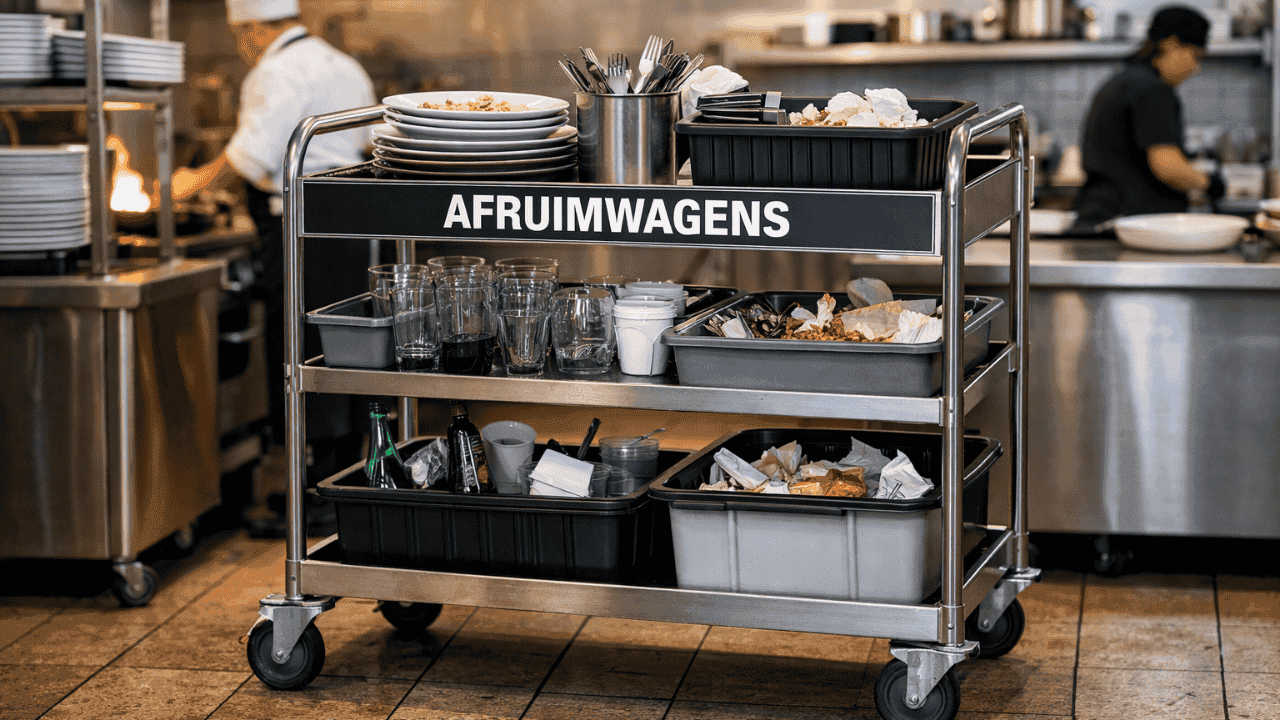
The most effective afruimwagens are designed around standard plate sizes, tray dimensions, and bin heights. They allow plates to slide on without scraping knuckles. They leave enough clearance for glasses without tipping. This sounds obvious, yet many carts ignore it entirely.
Wheels Are Not an Accessory
If there’s one part of afruimwagens that separates professional-grade equipment from cheap stock, it’s the wheels.
Good wheels roll quietly, turn smoothly under load, and don’t lock up when hitting thresholds or floor drains. Bad wheels rattle, drag, and require muscle to steer. Over a long shift, that difference translates into real fatigue.
Swivel casters on all four corners improve maneuverability in tight dining spaces. Locking wheels matter in sloped kitchens or loading zones. Rubber composition affects noise levels, which matters more in open dining rooms than buyers often realize.
Ignoring wheels is how you end up with a cart everyone avoids using.
Hygiene Is Designed, Not Enforced
Hygiene protocols fail when equipment fights them. Afruimwagens either support clean separation or encourage shortcuts.
Carts with smooth welds, rounded corners, and open frames clean faster and more thoroughly. Models with unnecessary seams and tight joints trap residue and require extra effort to sanitize. Staff notice this quickly and adjust their behavior, often in the wrong direction.
Integrated waste bins can improve hygiene if they’re positioned logically. Poor placement, however, leads to spills and cross-contact between waste and dishware. The best afruimwagens make the clean path the easy path without signage or reminders.
Enclosed vs Open Afruimwagens in Real Settings
Enclosed carts look tidy. They hide dirty dishes from guests and create a calmer visual impression. In front-of-house settings where carts pass through dining areas, this matters.
Open afruimwagens win on speed. They allow faster loading and unloading, better airflow, and easier inspection during cleaning. In back-of-house environments, they’re often the better choice.
The mistake is assuming one design fits all spaces. Many operations benefit from using both types strategically. Enclosed carts for guest-facing zones. Open carts where speed and access matter more than appearances.
Staff Ergonomics Is Not Optional
Repeated lifting, twisting, and reaching cause injuries. Afruimwagens influence all three.
Handle height affects posture. Too low and staff hunch. Too high and shoulders take the strain. Shelf height determines whether plates are lifted from the wrist or the elbow. Small design choices add up over thousands of movements per week.
Operations that ignore ergonomics pay later through sick days, turnover, and reduced productivity. The right afruimwagens quietly protect staff bodies without slowing anyone down.
Afruimwagens Outside Restaurants
Restaurants get most of the attention, but afruimwagens play critical roles elsewhere.
In hospitals, separation between clean and dirty transport isn’t negotiable. Carts often include distinct zones or color coding to avoid mistakes under pressure. In schools and cafeterias, tray return designs reduce labor by shifting part of the clearing process to users themselves.
Warehouses and factories use heavier afruimwagens to move tools and components. The principles stay the same: stability, load capacity, and ease of movement decide whether the cart helps or hinders daily work.
Cost Cutting vs Cost Control
Cheap afruimwagens feel like smart purchases until they start bending, squeaking, or cracking. Replacement cycles shorten. Repairs interrupt service. Staff compensate with workarounds that slow everything else down.
Spending more upfront on well-built afruimwagens is cost control, not luxury. The return shows up in durability, smoother shifts, and fewer complaints from the people actually using them.
Maintenance Is a Design Issue
Carts that require special tools or awkward disassembly to clean don’t get cleaned properly. Simple designs win here.
Removable shelves, accessible wheels, and open frames make routine maintenance faster. When maintenance fits naturally into closing routines, it actually happens. When it doesn’t, hygiene standards slide quietly until inspections or incidents force attention.
Choosing Afruimwagens With Intent
Buying afruimwagens should start with observation, not catalogs. Watch how staff clear tables. See where bottlenecks form. Notice what gets stacked, dropped, or avoided.
Then choose carts that remove those problems instead of adding new ones. There’s no universal best model. There is only what fits the reality of your space, volume, and workflow.
Final Take
Afruimwagens don’t impress guests directly, but they shape everything guests experience. Speed, cleanliness, staff confidence, and even noise levels trace back to how clearing is handled. Treat these carts like serious infrastructure, not background equipment, and the operation runs smoother without anyone needing to announce why.
FAQs
What is the biggest mistake people make when buying afruimwagens?
Focusing on price and ignoring wheels, shelf spacing, and load behavior under real conditions.
How often should afruimwagens be replaced in busy operations?
High-quality models can last years with proper maintenance. Frequent replacements usually signal poor initial choices.
Are heavier afruimwagens always better?
No. Weight helps stability, but excessive weight increases fatigue. Balance matters more than mass.
Do enclosed afruimwagens actually improve guest perception?
Yes, in visible areas. They reduce visual clutter and make service feel more controlled.
Should staff be involved in selecting afruimwagens?
Absolutely. They notice flaws management never sees, and their input prevents expensive mistakes.