
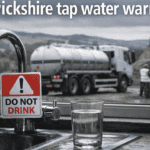




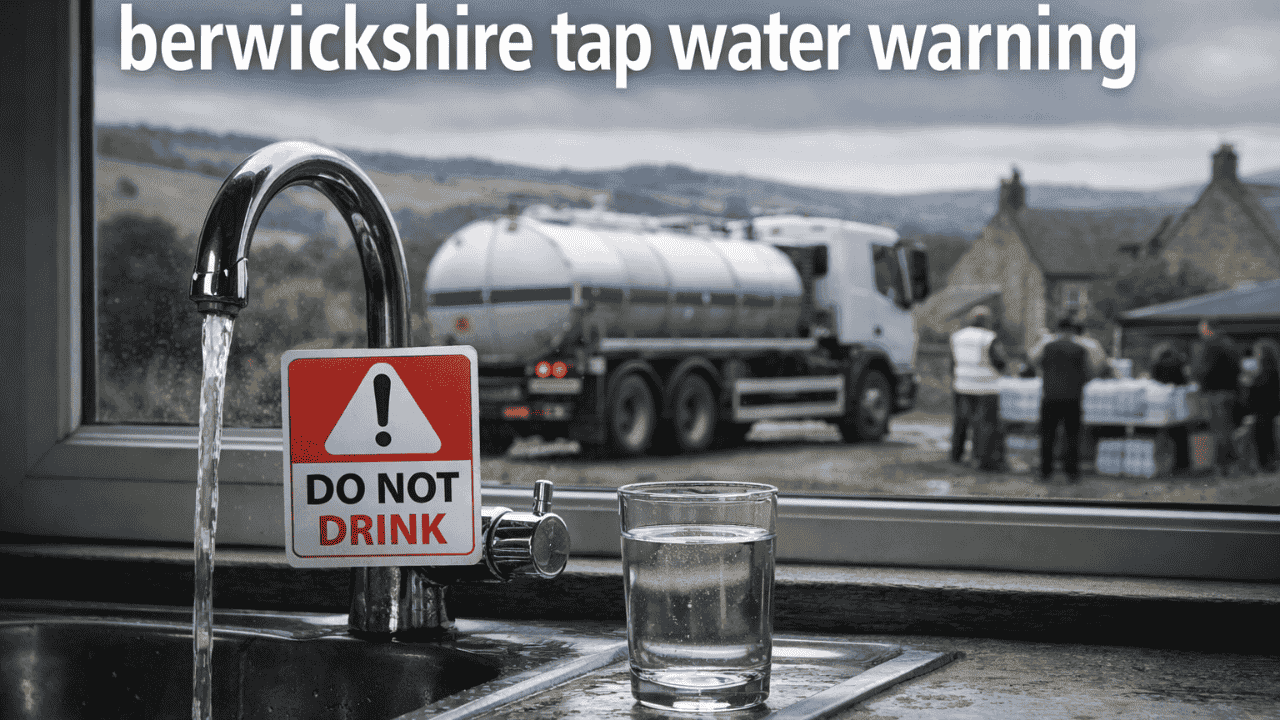
The berwickshire tap water warning caught thousands of residents off guard when a routine water supply suddenly became unsafe to drink. Households across several towns were told to avoid using tap water for drinking, cooking, or even brushing their teeth. The situation created immediate disruption, especially in rural communities where alternatives were limited. What began as a technical fault quickly turned into a large-scale public safety response. Understanding how this unfolded gives a clear picture of how fragile water systems can be when even a single point fails.
how the berwickshire tap water warning began
The berwickshire tap water warning started after a fault was detected at the Rawburn Water Treatment Works near Duns. This facility plays a central role in supplying treated water to a wide part of the Scottish Borders region. A damaged section within the system disrupted normal treatment processes, raising concerns about water quality. Authorities acted quickly once the issue was identified, prioritizing public safety over uncertainty. As a result, the berwickshire tap water warning was issued as a precaution rather than a response to confirmed illness.
Engineers found that the fault affected how water was processed and delivered through the network. Even though the water might have appeared clear, it no longer met safety standards required for consumption. This type of issue can allow contaminants or untreated water to enter the supply chain. Officials decided it was safer to restrict usage until full testing and repairs were completed. That decision led directly to the widespread berwickshire tap water warning affecting multiple communities.
areas and communities affected by the disruption
The reach of the berwickshire tap water warning extended across several towns and rural areas in the region. Communities that rely heavily on a shared network felt the impact almost immediately. Residents in places like Duns, Chirnside, and Coldstream experienced either complete loss of supply or unsafe water conditions. Smaller villages such as Eccles, Paxton, and Swinton were also included in the affected zone. The widespread nature of the problem highlighted how interconnected the system is.
For many households, daily routines were disrupted in ways that are often taken for granted. Simple tasks like making tea or cooking meals suddenly required bottled water. Schools, farms, and small businesses had to adjust quickly to the restrictions. The berwickshire tap water warning created challenges that went beyond inconvenience, especially for vulnerable residents. In rural areas, access to alternative water sources is not always immediate or easy.
what residents were told to do during the warning
During the berwickshire tap water warning, clear instructions were issued to ensure public safety. Authorities emphasized that tap water should not be consumed under any circumstances. This included activities that many people overlook, such as brushing teeth or preparing baby formula. The goal was to eliminate any risk while the system was being repaired and tested.
Residents were advised to avoid using tap water for the following:
- Drinking or making beverages
- Cooking food or washing ingredients
- Brushing teeth or rinsing mouths
- Preparing infant formula
- Giving water to pets
At the same time, some uses were still considered safe because they did not involve ingestion. People could continue using water for washing clothes, flushing toilets, and bathing. However, even these activities were approached with caution by many residents. The berwickshire tap water warning forced people to rethink everyday habits that normally feel automatic.
scale of the water supply disruption
The berwickshire tap water warning was not limited to a small number of households. At its peak, thousands of properties were affected by either unsafe water or reduced pressure. The water system in this region typically supports around 10,000 properties and delivers millions of litres daily. When the fault occurred, the network struggled to maintain normal supply levels. This created a ripple effect across the entire service area.
Some households experienced a complete loss of water, while others dealt with weak flow or inconsistent supply. The combination of quality concerns and physical shortages made the situation more complex. Emergency planning had to account for both problems at the same time. The berwickshire tap water warning demonstrated how quickly a single issue can escalate into a widespread disruption. It also showed the importance of having backup systems in place.
emergency response and support measures
Once the berwickshire tap water warning was issued, emergency response efforts began immediately. Authorities worked around the clock to provide alternative water sources to affected residents. Bottled water distribution became the primary solution, with supplies delivered directly to homes and made available at collection points. This effort required coordination between multiple teams and resources.
The response included several key actions:
- Distribution of over 100,000 bottles of water
- Deployment of more than 20 tanker vehicles
- Setup of multiple collection stations across affected areas
- Support teams assisting vulnerable individuals and families
In addition to household needs, special attention was given to farms and livestock. Animals rely heavily on consistent water access, and any disruption can have serious consequences. The berwickshire tap water warning required a response that balanced human and agricultural needs. This level of coordination helped reduce the overall impact of the crisis.
timeline of events and restoration process
The berwickshire tap water warning began in late August 2025 after the fault was discovered. Authorities acted quickly, but restoring the system was not immediate. Repairs had to be carried out carefully to ensure that the water supply would be safe once reintroduced. Testing played a major role in determining when restrictions could be lifted. This process required patience from both officials and residents.
The disruption lasted several days, with some areas recovering faster than others. Rural networks often take longer to stabilize because of the distance water must travel. Pipelines need to be refilled gradually to avoid pressure issues or further damage. The berwickshire tap water warning remained in place until all safety checks were completed. Only then were residents informed that normal usage could resume.
compensation and public reaction
Following the berwickshire tap water warning, compensation was offered to affected households. Payments were designed to acknowledge the inconvenience and disruption caused by the outage. While the amount was modest, it represented an effort to maintain trust with the community. Not all residents claimed the compensation, but the option was made widely available.
Public reaction to the incident was mixed, with some praising the quick response and others questioning the system’s reliability. For many, the situation raised concerns about infrastructure maintenance and preparedness. The berwickshire tap water warning served as a reminder that essential services are not immune to failure. It also highlighted the importance of clear communication during emergencies.
what the incident reveals about water infrastructure
The berwickshire tap water warning exposed weaknesses that are often overlooked in everyday life. Water systems operate quietly in the background, but they depend on complex networks and consistent maintenance. When one part fails, the effects can spread quickly across large areas. This incident showed how critical it is to invest in infrastructure before problems arise.
Rural systems face unique challenges due to distance and lower population density. Repairs can take longer, and alternative supply options may be limited. The berwickshire tap water warning brought attention to these issues in a very real way. It also emphasized the need for emergency planning that accounts for worst-case scenarios. Without preparation, the impact could have been far more severe.
how residents can prepare for similar situations
The berwickshire tap water warning offers practical lessons for households everywhere. Being prepared for short-term water disruptions can make a significant difference in how stressful the situation becomes. Simple steps can help ensure that basic needs are still met during an emergency. Preparation does not require major effort but can provide peace of mind.
Here are a few practical steps residents can take:
- Keep a supply of bottled water for emergencies
- Store clean containers for additional water storage
- Follow local authority updates during disruptions
- Avoid using tap water unless officially declared safe
Taking these steps can reduce dependence on emergency distribution systems. The berwickshire tap water warning showed that even well-managed responses can take time to reach everyone. Having a backup plan helps households stay self-sufficient during the early stages of a crisis.
conclusion
The berwickshire tap water warning was more than a temporary inconvenience; it was a clear example of how essential services can be disrupted without warning. A single fault at a treatment facility led to widespread restrictions affecting thousands of people. While the response helped manage the situation, the event exposed gaps in infrastructure and preparedness. It also reminded residents how much they rely on safe, consistent water access every day. Looking ahead, both authorities and communities can take lessons from the berwickshire tap water warning to reduce the impact of similar incidents in the future.
faqs
what caused the berwickshire tap water warning
The warning was triggered by a fault at the Rawburn Water Treatment Works, which affected water quality and safety.
how long did the berwickshire tap water warning last
The disruption lasted several days, with full restoration taking time due to system repairs and safety testing.
was the water completely unsafe during the berwickshire tap water warning
The warning was issued as a precaution because the water could not be confirmed as safe for consumption.
could residents use tap water for anything during the warning
Yes, water could still be used for bathing, washing clothes, and flushing toilets, but not for drinking or cooking.
were people compensated after the berwickshire tap water warning
Yes, compensation was offered to affected households, although not everyone claimed it.