







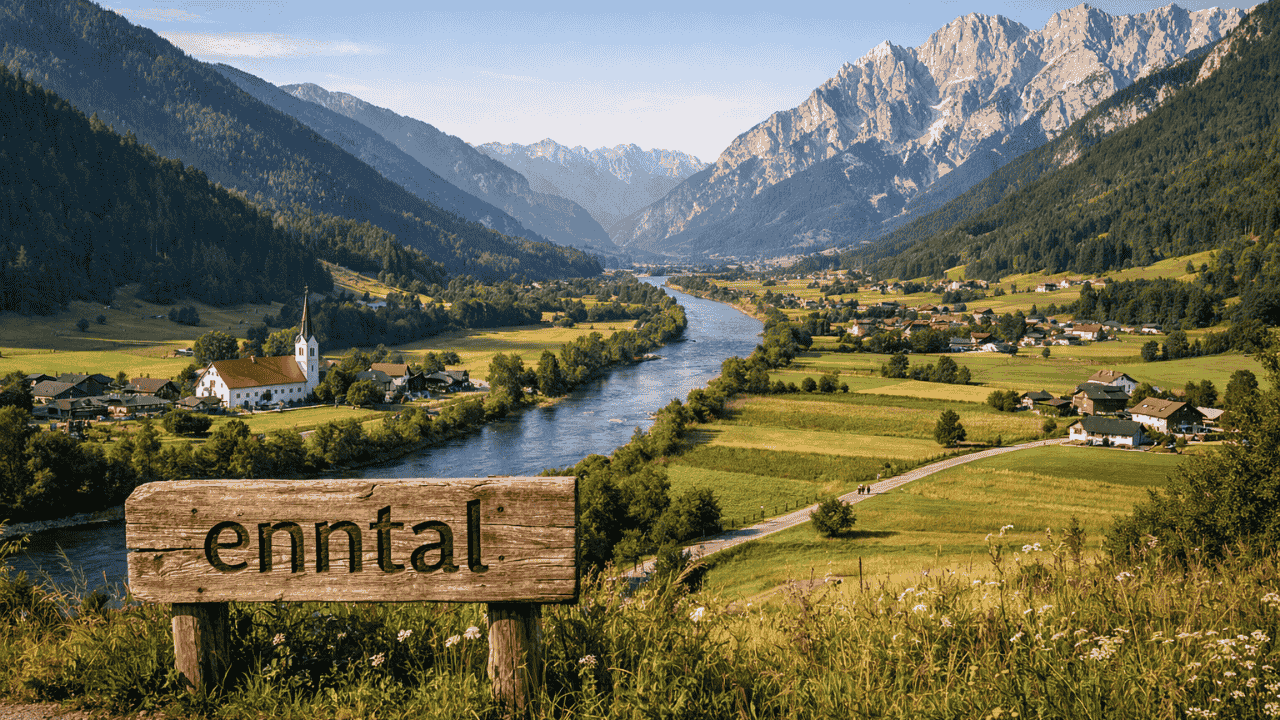
enntal doesn’t try to impress you. It doesn’t posture, doesn’t shout, doesn’t sell itself as the next must-see alpine hotspot. That restraint is exactly why the place works. Stretching along the Enns River, enntal feels lived in rather than packaged. People farm here. They commute. They hike after work. Tourism exists, but it stays in its lane. If you’re looking for a valley that still belongs to its residents, not its marketing department, enntal holds its ground.
The appeal isn’t a single landmark or postcard angle. It’s the length, the rhythm, and the way landscapes change gradually instead of dramatically. You move through enntal the way locals do: town by town, bend by bend, season by season.
Geography That Shapes Daily Life, Not Just Scenery
enntal runs for more than 100 kilometers, cutting across parts of Styria and Upper Austria. The Enns River is the spine, but the valley isn’t uniform. In some stretches, steep limestone walls crowd the road. In others, farmland opens up with room for villages, industry, and rail lines.
What matters is how usable the landscape is. enntal isn’t locked away behind mountain passes. Roads and trains follow the river, making the valley one of the most practical east-west corridors in the Alps. That practicality explains why enntal never became a single-purpose resort zone. It had work to do long before visitors showed up.
The mountains still dominate the horizon, but they don’t suffocate daily movement. That balance between access and scale is rare in alpine regions, and it’s one of enntal’s biggest strengths.
Towns That Refuse to Become Stage Sets
The towns scattered along enntal feel functional first, charming second. That order matters. Places like Schladming sit higher in the valley and lean more heavily into tourism, especially during ski season. Others farther east operate as regional hubs with schools, hospitals, and factories.
None of them feel frozen in time. Renovations happen. New housing goes up. Bakeries close and reopen under new ownership. enntal avoids the museum-town problem because people still need these places to work. You see that in small details: grocery stores sized for locals, not tour buses. Cafés that open early, not late.
Even the architecture tells the story. Farmhouses aren’t decorative replicas. They’re working buildings, expanded and repaired over generations. Churches dominate village centers, but they’re surrounded by parking lots and bike racks. enntal doesn’t pretend modern life hasn’t arrived.
Nature That Demands Participation
The landscape around enntal rewards effort. You don’t get the best views from the roadside. You earn them on foot or by bike. Trails climb quickly into forests and alpine pastures, then break out onto ridges where the valley stretches below like a map.
One of the most dramatic sections lies near Gesäuse National Park, where the Enns cuts through narrow gorges. This part of enntal feels rawer and louder. The river runs fast. Rock faces rise straight up. It’s not gentle scenery, and that’s the point.
Outdoor activity here isn’t framed as a lifestyle statement. It’s just what people do. Hiking before dinner. Ski touring instead of lifts. Cycling between towns because the route makes sense. enntal supports these choices without turning them into branded experiences.
Food Rooted in Routine, Not Reinvention
Eating in enntal isn’t about novelty. It’s about repetition done well. Menus lean heavily on regional staples: dumplings, game, river fish, potatoes, dairy. Recipes change slightly from one village to the next, but the base stays the same.
What stands out is how little explanation accompanies the food. Dishes arrive without backstories or performance. You’re expected to recognize what you’re eating or ask if you don’t. That confidence signals a place that isn’t chasing approval.
Seasonality isn’t advertised. It’s assumed. In autumn, venison shows up. In summer, lighter soups and fresh herbs take over. enntal cooking reflects availability, not trends, and that honesty carries through even in more polished restaurants.
History That Still Shows Its Weight
enntal has been a transit route since Roman times, and you feel that depth without needing plaques at every turn. Trade moved through the valley. Armies followed. Monasteries accumulated land and influence. The marks remain.
Admont Abbey stands as one of the clearest examples. Its library is famous, but the broader presence matters more. It represents centuries of control over education, agriculture, and culture in this part of enntal. The abbey didn’t just observe history. It shaped it.
Industrial history matters too. Mining, timber, and metalworking supported towns long before tourism offered alternatives. That working past explains why enntal never developed a single identity. It’s layered, sometimes awkward, and more interesting because of it.
Seasons That Actually Change How People Live
In enntal, seasons aren’t decorative. They alter schedules and priorities. Winter narrows options. Roads tighten. Villages feel smaller. Skiing and snowshoeing replace hiking, but daily life also slows in visible ways.
Spring arrives unevenly, creeping up the valley floor before touching higher slopes. Fields green up while peaks stay white. Summer opens everything at once: trails, festivals, construction projects, weddings. Autumn pulls it all back in, marked by harvests and hunting seasons.
Tourist-heavy alpine areas often flatten these shifts into a single endless high season. enntal resists that. The calendar still matters, and locals expect visitors to adapt, not the other way around.
Why enntal Stays Under the Radar on Purpose
The lack of aggressive promotion isn’t accidental. enntal benefits from being known, but not overknown. Infrastructure supports visitors without bending entirely toward them. That balance protects housing prices, traffic flow, and social cohesion.
You won’t find oversized theme attractions or artificial viewpoints designed for quick stops. The valley assumes you’re willing to spend time. If you aren’t, it doesn’t chase you.
That quiet selectiveness filters the audience. enntal attracts people who value continuity over spectacle. Once they arrive, many return. Few try to reinvent the place in their image.
Living With the Landscape Instead of Consuming It
What enntal offers, above all, is a model of coexistence. Nature isn’t fenced off. Industry isn’t hidden. Tourism isn’t dominant. The pieces overlap without fully merging.
That coexistence shows in everyday scenes: tractors sharing roads with cyclists, hikers passing through grazing land, trains running alongside rivers and cliffs. None of it feels staged. It feels negotiated over time.
For anyone tired of alpine regions turned into polished products, enntal stands as a counterexample. It doesn’t need to be louder to be compelling. It just needs to keep being itself.
Conclusion
enntal isn’t trying to win attention, and that’s exactly why it deserves it. The valley proves that restraint can be more powerful than reinvention. By staying practical, inhabited, and slightly indifferent to outside expectations, enntal protects what makes it work. The real takeaway is simple: places don’t need to chase relevance if they already have purpose.
FAQs
- Is enntal suitable for slow travel rather than short sightseeing stops?
Yes. enntal rewards longer stays because the experience builds through movement between towns, trails, and seasons rather than single attractions. - How easy is it to get around enntal without a car?
Public transport follows the valley closely. Trains and regional buses make it realistic to move between major towns, though remote trailheads still require planning. - Does enntal feel crowded during peak summer months?
Crowds concentrate in specific areas, not across the whole valley. Many sections remain quiet even in July and August. - Are there cultural events worth planning a trip around?
Local festivals tied to agriculture, music, and regional history happen throughout the year, often organized by villages rather than tourism boards. - What kind of traveler fits enntal best?
People who value function over flash, who enjoy moving through places instead of ticking them off, tend to connect with enntal quickly.