








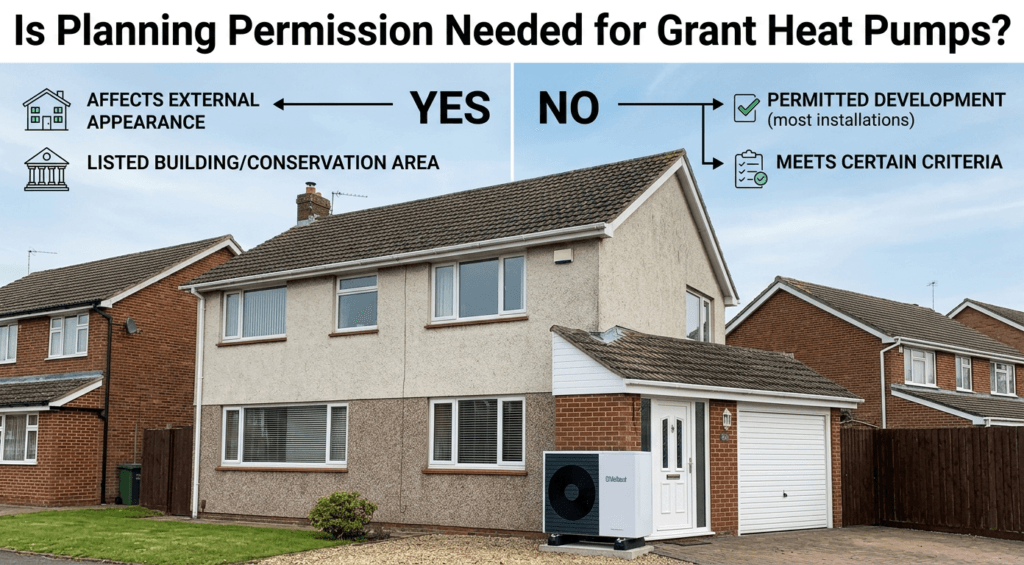
Many UK homeowners want to install heat pumps. Grants make this option more affordable and attractive. However, many people worry about planning permission rules. They want to avoid delays or legal issues.
This guide explains when planning permission is needed. It also explains when it is not required. You will learn simple rules for installing a heat pump in the UK. We will also explain how the government grant for Air Source Heat Pumps links with these rules. By the end, you will feel more confident about your next step.
What Is a Heat Pump?
A heat pump heats your home using outside air or ground energy. The system requires electrical power to transfer heat between locations, which it does not produce itself. This makes it more efficient than traditional boilers.
Air source heat pumps are the most common type in the UK. Ground source heat pumps are also used, but cost more. Energy savings will increase over time for both systems.
Do You Always Need Planning Permission?
Most situations do not require planning permission. The development rights for heat pumps permit their installation without official approval.
The system allows for installation without official permission, but you must comply with all established regulations. The system requires permission when you violate any of its established rules.
What Are Permitted Development Rights?
Permitted development rights allow certain home changes without planning approval. The UK government created these rules to simplify home improvements.
Heat pumps are included under these rights in many cases. But the installation must meet specific conditions. These rules protect neighbours and the local surroundings.
Rules for Air Source Heat Pumps
Air source heat pumps must meet clear requirements. They must be installed at least one metre from your property boundary. The unit should not be placed on a pitched roof. It must not face a main road if near the front of your home.
Noise levels must stay within allowed limits. Only one heat pump is usually allowed under these rules. Installers must follow Microgeneration Certification Scheme standards. This ensures safety and proper performance.
Rules for Ground Source Heat Pumps
Ground source heat pumps usually do not need planning permission. This is because most parts are installed underground. However, permission may be needed for large drilling works.
The determination requires assessment of your property and the regulations established by your municipal government. The municipal government requires residents to verify their property boundaries before commencing any extensive digging activities.
When Planning Permission Is Required
The requirements for planning permission apply to specific cases. The cases require urgent attention because they are critical. You need permission if:
- Your home is a listed building.
- Your property is in a conservation area.
- The system does not meet permitted development rules.
- You want to install more than one unit.
- The heat pump will create substantial effects on your neighbour’s properties.
Local councils may impose additional restrictions on businesses. All businesses must verify their compliance standards with the local planning authority.
What About Flats and Apartments?
Planning permission is usually required for flats and apartments. The shared outdoor areas and interior walls force this requirement.
External units may affect other residents. The building’s owners and landlords need to approve the request. The initial step requires you to contact your building management.
Do Grants Change Planning Rules?
Grants do not remove planning permission requirements. You must still comply with all local regulations, together with national statutes.
The main grant available is the Boiler Upgrade Scheme. This scheme helps reduce installation costs. However, the grant only covers financial support. It does not guarantee planning approval. Permission must be obtained first before commencing the required activities.
How to Check If You Need Permission
The planning decisions require an 8-week processing time for completion. The review process requires additional time when handling complex cases. The process experiences delays when extra documentation becomes necessary.
To prevent your project from experiencing delays, you should submit your application as early as possible. This tool helps you understand permitted development rules. A certified installer can also guide you. They often handle checks before starting work.
How Long Does Planning Permission Take?
Planning decisions usually take around 8 weeks. Complex cases may take longer to review. Delays can happen if more information is needed. Apply early to avoid project delays.
Tips to Avoid Planning Problems
Follow simple steps to avoid issues later. Choose a qualified and certified installer. They understand rules and proper installation methods. Place the unit away from neighbours where possible. This helps reduce noise complaints.
Your design should remain basic while staying within permitted design boundaries. The process requires you to seek approval for any modifications that exceed necessary design alterations. Always check local rules before starting work.
Benefits of Following the Rules
Following the rules keeps your project smooth and stress-free. You avoid fines and legal problems later.
Your installation will meet safety and quality standards. It also protects your property value. Buyers prefer homes with approved installations.
Common Mistakes to Avoid
Many homeowners make simple but costly mistakes. They assume permission is never required. This can lead to legal trouble later. Some install units too close to boundaries. This breaks permitted development rules.
Others ignore noise limits and neighbour concerns. This can result in complaints and enforcement action. Always plan carefully before installation.
Final Thoughts
Most heat pump installations do not need planning permission. The installations exist as permitted development rights. The installations require compliance with strict regulations at all times. Some properties will still require approval. This includes listed buildings and flats.
Grants provide significant cost reductions. Yet they do not eliminate the need for planning regulations. You should always verify requirements with your local council. The basic process enables you to achieve both time and financial savings.
The process of installation becomes simple when people plan their work effectively, while also resolving common setup issues, such as a Hive thermostat not connecting.