






A well-crafted guidebook can quietly shape how guests experience a property from the moment they arrive. In high-end rentals, it does more than explain how things work. It reduces confusion, answers questions before they are asked, and subtly reinforces the value of the stay. This is where luxury vacation rental guidebook criteria becomes important, because not every guidebook delivers the same level of clarity or experience. The difference often shows up in guest reviews, repeat bookings, and how often hosts get interrupted during a stay.
What Defines a Luxury-Level Guidebook Experience
A standard guidebook provides instructions, but a luxury one feels like a built-in concierge. It anticipates needs, guides decisions, and removes friction at every step. When applying luxury vacation rental guidebook criteria, the focus shifts from dumping information to shaping a smooth and thoughtful journey. Guests should never feel lost or unsure about what to do next. Everything from arrival to checkout should feel obvious and easy.
Another defining trait is tone. A luxury guidebook speaks clearly without sounding robotic or overly formal. It feels intentional, almost like the host is present but without being intrusive. This tone builds trust and comfort, which directly impacts how guests perceive the overall stay. The more natural and helpful the guidebook feels, the more it aligns with true luxury vacation rental guidebook criteria.
Core Sections Every Guidebook Must Include
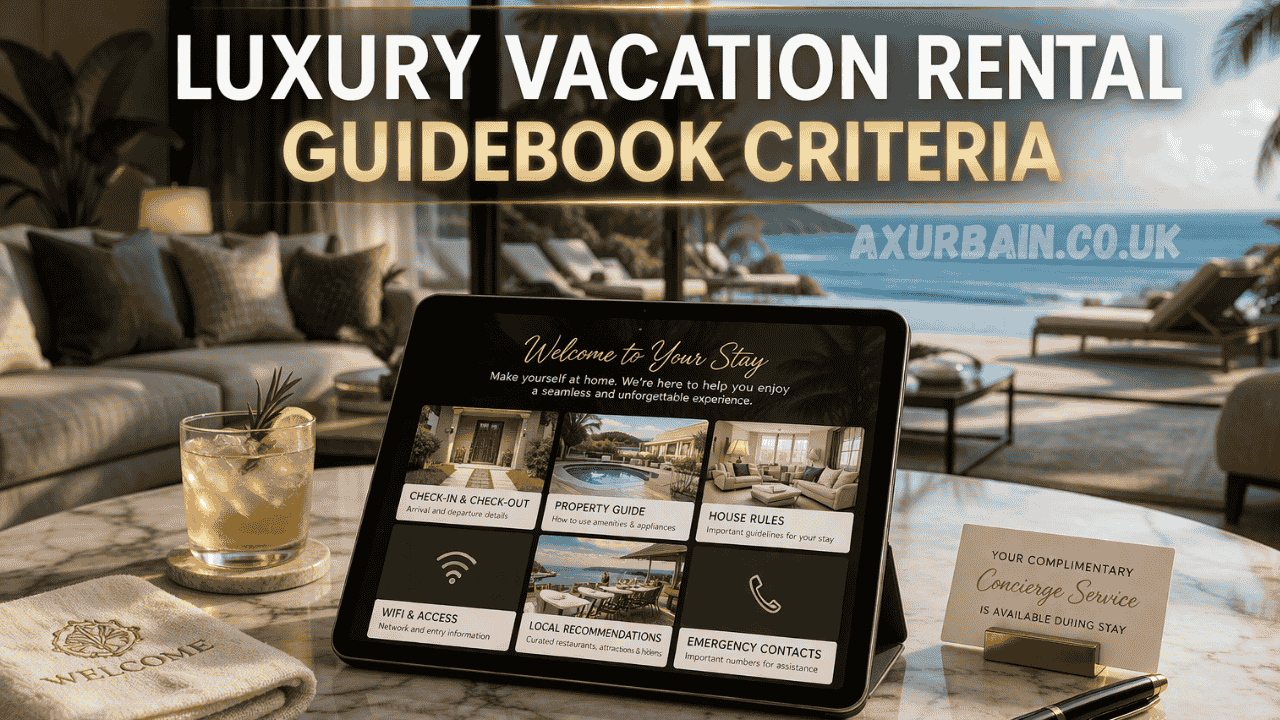
Every guidebook starts with a foundation of essential sections. These are not optional, and skipping any of them weakens the guest experience. However, meeting luxury vacation rental guidebook criteria means these sections must be refined, not just included.
Key sections include:
- Welcome message that sets expectations and tone
- Check-in and check-out instructions with clear steps
- WiFi details and access information
- House rules written in a friendly tone
- Appliance and amenity usage instructions
- Emergency contacts and safety information
- Local recommendations tailored to the guest experience
Each of these sections should be easy to scan and structured logically. Guests often skim rather than read everything, so clarity matters more than length. When these basics are handled well, the guidebook already starts to meet luxury vacation rental guidebook criteria at a foundational level.
Arrival Experience Sets the First Impression
The arrival section is one of the most critical parts of any guidebook. Guests are often tired, unfamiliar with the area, and looking for quick answers. A strong arrival guide removes stress and creates a sense of ease right away. This is a core part of luxury vacation rental guidebook criteria because first impressions shape everything that follows.
This section should include step-by-step directions, landmarks, and parking details. If the property is hard to find, include photos or simple visual cues. Entry instructions should be broken down clearly, especially if smart locks or codes are involved. When done right, guests walk in confidently instead of messaging the host for help.
Turning Property Instructions Into a Smooth Experience
Most hosts include appliance instructions, but few present them well. In luxury properties, even small frustrations can feel amplified. Meeting luxury vacation rental guidebook criteria means simplifying how guests interact with the space. Instructions should be short, clear, and supported by visuals when possible.
Instead of long paragraphs, break things into steps. Focus on what guests actually need to know, not technical details. For example, how to start the jacuzzi or adjust the thermostat should be explained in seconds. This approach keeps the experience smooth and prevents unnecessary interruptions.
The Role of Personalization in High-End Guidebooks
Generic recommendations weaken the impact of a guidebook. Guests can search online for popular places, so repeating that information adds little value. What makes a difference is curated, personal insight. This is where luxury vacation rental guidebook criteria truly stands out from standard practices.
A strong guidebook includes:
- Favorite local restaurants with specific dishes to try
- Hidden spots that are not widely advertised
- Activity suggestions based on guest types like couples or families
- Day plans or simple itineraries
These details make the guidebook feel thoughtful rather than generic. Guests often remember these recommendations more than the property itself.
Digital Guidebooks and Why They Matter
Printed guidebooks still exist, but digital versions have become the standard for high-end rentals. They are easier to update, more interactive, and more convenient for guests. Following luxury vacation rental guidebook criteria today often means adopting a mobile-friendly format.
Digital guidebooks can include maps, photos, and even short videos. Guests can access them anytime without flipping through pages. This reduces outdated information and allows hosts to make quick changes when needed. The flexibility of digital formats makes them a natural fit for modern luxury expectations.
Writing Style and Structure That Keeps Guests Engaged
Even useful information can be ignored if it is poorly written. A cluttered or overly dense guidebook discourages engagement. Luxury vacation rental guidebook criteria emphasizes clarity, flow, and readability above everything else. The goal is to make information easy to consume in seconds.
Keep sentences short and direct. Avoid long explanations when a simple instruction will do. Break content into sections that are easy to scan. When guests can quickly find what they need, the guidebook becomes a tool they actually use instead of ignore.
Using the Guidebook to Increase Revenue
Many hosts overlook the revenue potential of a guidebook. It is not just an informational tool but also a subtle sales channel. When aligned with luxury vacation rental guidebook criteria, it can guide guests toward premium experiences.
Opportunities include:
- Recommending private chefs or catering services
- Promoting local tours or exclusive activities
- Suggesting add-ons like late checkout or extra services
- Highlighting partner businesses
The key is to keep recommendations helpful rather than pushy. Guests should feel guided, not sold to.
Common Mistakes That Lower the Quality of Guidebooks
Even well-designed properties can fall short because of weak guidebooks. Avoiding common mistakes is just as important as adding the right elements. These mistakes often break the flow of the guest experience and create unnecessary friction.
Frequent issues include:
- Overloading the guidebook with too much text
- Providing generic or outdated recommendations
- Using unclear or inconsistent formatting
- Writing in a cold or overly formal tone
- Ignoring visual elements like photos or maps
Fixing these problems instantly improves alignment with luxury vacation rental guidebook criteria. Small adjustments can make a noticeable difference in how guests interact with the content.
Visual Design and Layout Considerations
A guidebook is not just about what it says but how it looks. Clean design improves usability and makes information easier to process. Luxury vacation rental guidebook criteria includes thoughtful layout decisions that support readability.
Use spacing to separate sections clearly. Avoid cramming too much into a single page or screen. Include images where they add value, such as showing parking spots or appliance controls. A well-structured layout helps guests find answers quickly without frustration.
Why Consistency Matters Across the Experience
The guidebook should reflect the same style and tone as the property itself. A modern villa should not have a dull or outdated guidebook. Everything should feel aligned, from design to language. This consistency is a key part of luxury vacation rental guidebook criteria.
When the guidebook matches the overall experience, it strengthens the brand of the property. Guests notice these details, even if they do not consciously think about them. Consistency creates a sense of quality and attention to detail.
Conclusion
A guidebook in a luxury rental is not just a document but part of the experience itself. It shapes how guests move through the space, how often they need help, and how they remember their stay. Meeting luxury vacation rental guidebook criteria means focusing on clarity, personalization, and ease of use at every level. When done right, it reduces friction, increases satisfaction, and even opens new revenue opportunities. Hosts who treat their guidebook as a core part of the guest journey often see stronger reviews and more repeat bookings.
FAQs
- What is meant by luxury vacation rental guidebook criteria?
It refers to the standards and elements that make a guidebook suitable for high-end properties, focusing on clarity, personalization, and guest experience. - How is a luxury guidebook different from a standard one?
A luxury guidebook acts like a concierge, offering curated recommendations and a smoother user experience instead of just basic instructions. - Should guidebooks be digital or printed?
Digital guidebooks are more practical because they are easy to update, accessible on mobile devices, and can include interactive elements. - How often should a guidebook be updated?
It should be reviewed regularly to ensure all information, especially local recommendations and instructions, stays accurate. - Can a guidebook help increase bookings or revenue?
Yes, a well-designed guidebook can promote services, improve guest satisfaction, and encourage repeat bookings.