

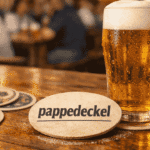





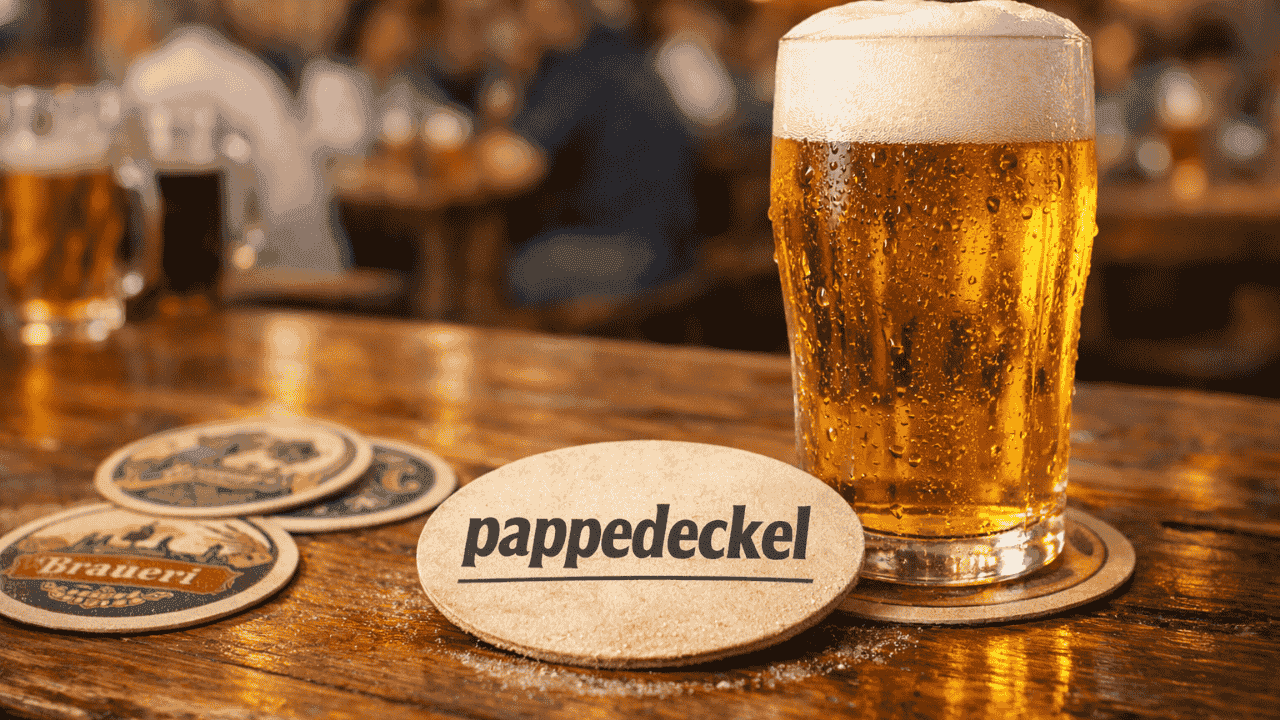
A small piece of cardboard sitting under a beer glass may look unimportant, yet in Germany it carries history, tradition, and even a practical system for ordering drinks. That simple object is known as pappedeckel. Walk into a traditional pub, a brewery taproom, or a crowded beer festival in Germany and you will almost always find a pappedeckel under every mug or glass.
The word itself comes from German and translates roughly to “cardboard lid.” Over time, the meaning became closely tied to beer culture, where it describes the cardboard coaster used under drinks. Today, the pappedeckel is more than a protective layer for tables. It serves as a marketing tool, a beer counter for waiters, and a collectible item for enthusiasts around the world.
Understanding the Meaning of pappedeckel
The term pappedeckel combines two German words. “Pappe” refers to cardboard, while “deckel” means lid or cover. Together they describe a piece of cardboard used to cover or support something. In daily life, the term became associated with the cardboard coaster placed under beer glasses.
In pubs and beer halls, the pappedeckel functions as a practical tool. It absorbs condensation from cold drinks and prevents liquid from dripping onto tables. Wooden tables in old pubs can easily become damaged by moisture, so the pappedeckel helps preserve them.
Many visitors to Germany first encounter a pappedeckel during their first beer at a local bar. The bartender sets the glass down, often on top of a printed coaster that displays a brewery logo. That small detail reflects a long tradition connected to the country’s beer culture.
The Role of pappedeckel in German Beer Culture
Beer culture in Germany is deeply rooted in tradition. Centuries-old breweries, beer gardens, and festivals rely on customs that have been passed down for generations. The pappedeckel plays a quiet but steady role in this environment.
In traditional beer halls, a pappedeckel sits under nearly every drink. This simple object protects the table surface while also keeping the glass stable. Because German beer mugs can be heavy, the cardboard coaster prevents slipping and reduces the sound when the mug is placed down.
The pappedeckel also appears at major beer celebrations. Events such as large regional festivals and local brewery gatherings distribute thousands of coasters each day. Many visitors keep them as souvenirs after the event.
This everyday item has become so closely tied to drinking culture that people often associate the pappedeckel with the relaxed social atmosphere of German pubs.
Materials and Design of a Typical pappedeckel
Although it looks simple, the design of a pappedeckel is carefully planned to serve its purpose. Manufacturers use compressed wood pulp to create thick, absorbent cardboard.
A typical pappedeckel has several key characteristics:
- Thickness usually ranges between 1 and 2 millimeters
- The surface absorbs moisture quickly
- Edges are rounded to prevent tearing
- The top layer allows clear printing for logos or artwork
Most pappedeckel are round, though square versions are also common. Breweries often choose shapes that fit their branding style. Because cardboard is inexpensive and easy to print on, millions of pappedeckel are produced each year.
Printing technology allows bright colors, detailed logos, and promotional messages to appear clearly on each coaster.
Why Bars and Breweries Use pappedeckel
There are several practical reasons why bars continue to rely on the pappedeckel.
First, the coaster protects furniture. Cold drinks create condensation, which can leave water rings on wooden tables. The pappedeckel absorbs this moisture before it spreads.
Second, the coaster reduces noise. Beer mugs placed directly on a hard table can produce a loud sound. A pappedeckel softens the impact.
Third, the coaster helps with grip and stability. A slightly textured cardboard surface prevents glasses from sliding easily.
Other benefits include:
- keeping tables cleaner during busy hours
- reducing the need for constant wiping
- giving customers a small writing surface for notes or games
Because the pappedeckel is disposable and inexpensive, it remains one of the most practical solutions for busy pubs.
pappedeckel as a Marketing Tool for Breweries
Beyond its practical use, the pappedeckel has become a small but powerful advertising space. Breweries print their brand name, logo, and sometimes slogans directly onto the coaster.
When customers sit down at a table, the first thing they often see is the printed pappedeckel waiting under their glass. This creates a quiet form of marketing that works without being intrusive.
Breweries use the coaster for several promotional purposes:
- displaying the brewery logo
- promoting seasonal beers
- advertising upcoming festivals
- highlighting limited edition drinks
Because customers spend time looking at their table while drinking and talking, the pappedeckel keeps the brand visible throughout the visit.
How pappedeckel Helps Track Beer Orders
In some traditional pubs, the pappedeckel also works as a simple accounting system. Instead of writing orders in a notebook or using digital tools, waiters sometimes mark lines directly on the coaster.
Each line represents one beer served. When the customer finishes their drinks and asks for the bill, the server counts the marks on the pappedeckel.
This system has been used in many older establishments because it is fast and efficient during busy hours. The coaster stays with the customer’s glass, making it easy for staff to track orders without confusion.
Although modern payment systems are common today, the marked pappedeckel still appears in traditional pubs where old habits remain part of the charm.
The Difference Between pappedeckel and Bierdeckel
Another word often heard in Germany is bierdeckel. This term also refers to a beer coaster. In everyday conversation, many people use both words to describe the same object.
However, there is a small difference in meaning.
The word bierdeckel focuses directly on beer, meaning “beer lid” or beer coaster. The word pappedeckel refers to the material, describing a cardboard lid or cover.
Because most beer coasters are made from cardboard, the terms often overlap in casual speech. In many pubs, customers will hear both words used interchangeably.
Collecting pappedeckel as a Hobby
Some people see the pappedeckel as more than a disposable coaster. Collectors around the world gather beer mats from different breweries, countries, and festivals.
This hobby is known as tegestology, the study and collection of beer coasters. Enthusiasts search for rare prints, historical brewery designs, and limited festival editions.
Collectors enjoy pappedeckel for several reasons:
- each coaster represents a brewery or event
- designs change frequently
- they are easy to store and display
- they capture pieces of beer history
A single collection may include hundreds or even thousands of pappedeckel gathered over many years.
Fun and Unexpected Uses of pappedeckel
Although its main job is supporting a drink, the pappedeckel often ends up being used in creative ways inside pubs.
Customers sometimes turn the coaster into a quick notepad for phone numbers or reminders. Others use it for casual table games while waiting for food.
A few common uses include:
- sketching small drawings
- writing down drink orders for friends
- folding the coaster into simple shapes
- stacking them for pub games
In crowded beer halls, the pappedeckel can even act as a signal. Some people place it on top of their glass to show they are not finished with their drink.
The Lasting Presence of pappedeckel in Modern Bars
Even with modern technology and digital ordering systems, the pappedeckel continues to appear in bars across Europe and beyond. Its usefulness has not faded.
Many modern craft breweries still print custom coasters because they combine function with brand promotion. A pappedeckel costs very little to produce but stays visible to customers throughout their visit.
The coaster also adds character to a drinking environment. Without it, the table might feel incomplete. With it, the setting feels closer to a traditional beer hall.
Conclusion
The pappedeckel may look like an ordinary piece of cardboard, but it carries a long history connected to German beer culture. It protects tables, supports heavy glasses, and quietly advertises breweries to customers. In traditional pubs it can even serve as a simple tool for tracking drink orders.
Over time, the pappedeckel has become more than a coaster. It represents a small but recognizable part of the social experience inside beer halls and bars. From marketing to collecting, this simple cardboard circle continues to play a role in the world of beer.
Even as bars modernize, the pappedeckel remains a familiar sight under every freshly poured drink, proving that sometimes the simplest objects last the longest.
FAQs
What does pappedeckel mean?
pappedeckel is a German word that means cardboard lid or cardboard coaster. In pubs it refers to the beer coaster placed under a drink.
Why do German bars use pappedeckel?
Bars use a pappedeckel to absorb condensation from drinks, protect wooden tables, and provide a stable surface for beer glasses.
Are pappedeckel only used in Germany?
While the tradition started in Germany, similar cardboard beer coasters are used in pubs and bars across many countries.
What material is a pappedeckel made from?
A pappedeckel is usually made from compressed wood pulp cardboard designed to absorb moisture quickly.
Can people collect pappedeckel?
Yes, many people collect pappedeckel as a hobby. Beer coaster collecting is known as tegestology and includes coasters from breweries, festivals, and historical pubs.