







The internet runs on a system of numerical addresses that allow devices to communicate with each other. Sometimes strange or confusing addresses appear in search results, server logs, or technical discussions, and one example that has drawn attention is 185.63.253.300. At first glance it looks like a normal IPv4 address, but a closer look shows something unusual about it. Many people encounter 185.63.253.300 while reviewing network logs, troubleshooting server activity, or searching for unfamiliar traffic sources. Understanding why this address appears and what it actually represents requires a basic look at how IP addresses work.
The address 185.63.253.300 often raises questions among developers, website owners, and system administrators. Some assume it may be linked to suspicious activity, while others believe it may represent a real server or location. In reality, the explanation is much simpler and tied to the rules that define valid IPv4 addresses. By examining the structure of IP addresses and common network behaviors, it becomes clear why 185.63.253.300 cannot exist as a legitimate internet address. This article explains the technical reasons behind it and why the number continues to appear in online discussions.
Understanding How IPv4 Addresses Work
An IPv4 address is a numerical label assigned to devices connected to a network. It allows computers, servers, and websites to identify each other and exchange information across the internet. Every IPv4 address is divided into four segments separated by periods. Each segment is called an octet and represents a number within a specific range.
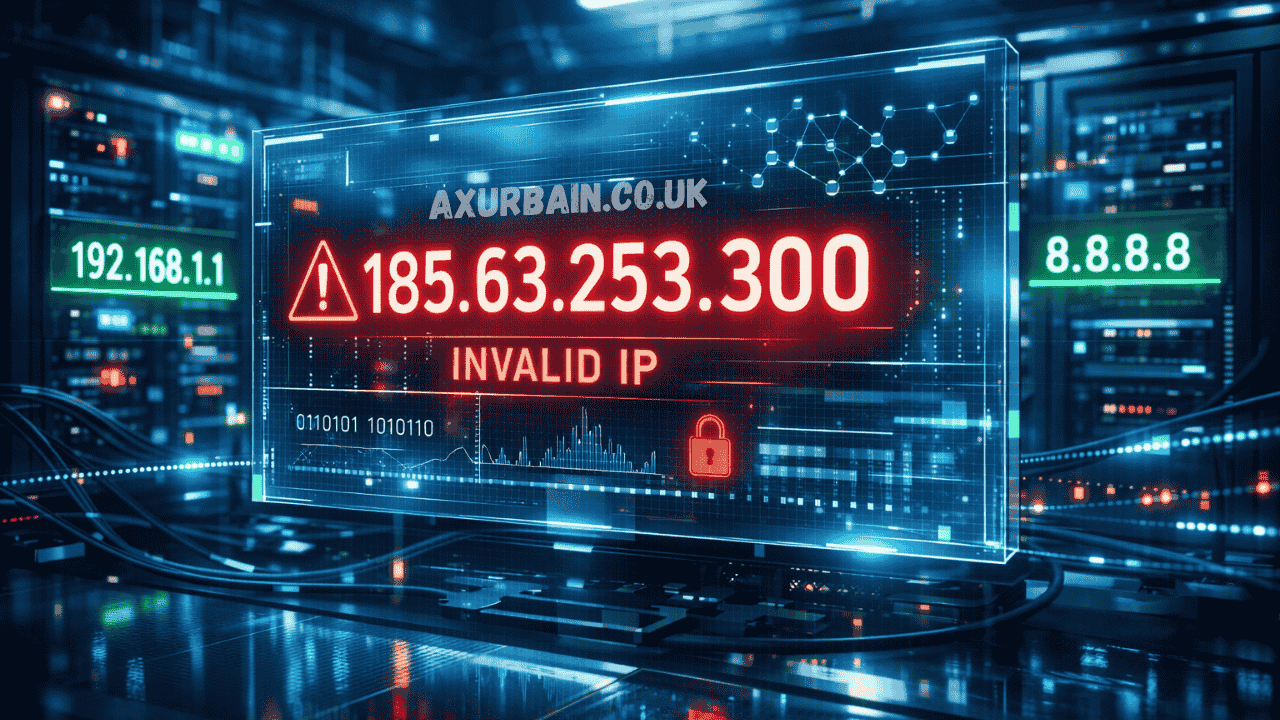
The structure of IPv4 addresses follows a strict rule: every octet must be between 0 and 255. These limits exist because IPv4 addresses are based on an eight-bit binary system, which can represent only 256 possible values. As a result, any number higher than 255 breaks the format and becomes invalid. When people encounter 185.63.253.300, the issue becomes obvious because the last segment exceeds the maximum allowed value.
Many common IP addresses follow this format correctly. For example, addresses like 192.168.1.1 or 8.8.8.8 fit within the allowed numerical range and function properly on networks. The address 185.63.253.300 does not meet these conditions, which means it cannot be assigned to any real device on the internet.
Why 185.63.253.300 Is Not a Valid IP Address
The main reason 185.63.253.300 cannot function as an internet address lies in the final octet. Since the number 300 is outside the allowed range of 0 to 255, the address breaks the fundamental rule of IPv4 formatting. Even if the first three segments are valid, a single invalid segment makes the entire address unusable.
Network protocols and routing systems reject addresses that fall outside the permitted range. Routers and servers rely on standardized formats to ensure reliable communication between devices. Because of this rule, an address such as 185.63.253.300 cannot be registered, routed, or used by any networked system. It exists only as an example of an improperly formatted IP address.
People sometimes assume that unusual IP addresses represent hidden servers or restricted networks. In the case of 185.63.253.300, however, the explanation is simply a formatting error. The number violates the basic structure required for IPv4 communication, which means it has no real presence on the internet.
Situations Where 185.63.253.300 May Appear
Although 185.63.253.300 is not a valid address, it still appears in many places online. Website administrators occasionally notice it in traffic logs or analytics reports. In most cases, the appearance of 185.63.253.300 results from data errors or incorrect formatting during logging or processing.
Several technical scenarios can lead to addresses like 185.63.253.300 showing up in system records. These situations often occur when software handles network information incorrectly. When systems process large amounts of traffic data, small parsing errors can generate malformed addresses.
Common reasons include the following:
- server log formatting mistakes during data recording
- software bugs that incorrectly interpret network values
- corrupted log files that display incomplete addresses
- proxy or firewall misconfigurations producing invalid outputs
In each of these situations, the appearance of 185.63.253.300 does not indicate a real visitor or server. Instead, it usually reflects a technical issue with how information was recorded or processed.
Typographical Errors That Produce 185.63.253.300
Another simple explanation for the presence of 185.63.253.300 is human error. When entering IP addresses manually, it is easy to add an extra digit or misread a number. A valid address such as 185.63.253.30 can quickly become 185.63.253.300 if someone mistakenly adds another zero.
These mistakes often occur during tasks like configuring servers, reviewing logs, or documenting network data. Even experienced administrators can occasionally mistype long numerical strings, especially when working with multiple IP ranges. Once the incorrect address appears in documentation or reports, it may spread through copied information.
Some valid addresses that could be mistaken for 185.63.253.300 include:
- 185.63.253.30
- 185.63.253.3
- 185.63.253.200
Because these addresses share similar structures, a small typing mistake can produce the invalid format seen in 185.63.253.300.
The Real IP Range Behind the Numbers
While 185.63.253.300 itself cannot exist, the first three segments belong to a legitimate IPv4 network range. The block 185.63.253.0/24 is part of an allocated IP range used by hosting providers. Networks within this block may host websites, servers, and cloud infrastructure located in data centers.
Addresses inside this range follow the correct IPv4 format and remain within the allowed number limits. Examples include numbers where the final octet stays between 0 and 255. These addresses may represent servers running websites, email services, or hosting platforms.
Examples of valid addresses from the same range include:
- 185.63.253.10
- 185.63.253.45
- 185.63.253.200
These addresses follow the proper IPv4 rules, which means they can be routed and accessed through the internet. The address 185.63.253.300 differs only because the last segment exceeds the permitted limit.
Why Strange IP Addresses Appear in Security Discussions
Security researchers often examine unusual entries in network logs to identify potential threats or anomalies. When an address like 185.63.253.300 appears in logs, analysts may initially investigate whether it indicates malicious activity. In many cases, however, the unusual address simply results from data formatting problems.
During automated scans or bot activity, systems may generate malformed requests that include invalid network values. These malformed entries can sometimes be recorded by servers before being rejected by networking rules. As a result, administrators reviewing logs may encounter addresses such as 185.63.253.300 even though they are not technically valid.
Security teams typically follow a process when investigating suspicious IP addresses. Their analysis often includes the following steps:
- verifying whether the IP format follows valid networking rules
- checking firewall and proxy logs for parsing errors
- comparing entries with known valid IP ranges
- identifying whether the record resulted from a logging bug
When this process is applied to 185.63.253.300, the invalid format quickly reveals that it cannot represent a real network source.
How Network Systems Validate IP Addresses
Modern networking software automatically validates IP addresses before accepting them for routing or communication. This validation ensures that devices exchange information using properly formatted addresses. If an address does not follow IPv4 rules, the system rejects it immediately.
Validation checks typically examine each segment of the address individually. Software confirms that every octet falls within the allowed range and that the structure matches the expected pattern. Because the final segment of 185.63.253.300 exceeds the limit, validation systems identify it as invalid.
This validation process prevents incorrect addresses from disrupting network communication. Without these safeguards, routing systems would struggle to interpret malformed addresses and could deliver data to incorrect destinations. The rejection of addresses like 185.63.253.300 helps maintain stable and reliable network operations.
Why People Search for 185.63.253.300 Online
Despite being invalid, the address 185.63.253.300 has attracted curiosity across forums, blog posts, and technical discussions. Many users encounter it while reviewing server activity or troubleshooting network configurations. Because it resembles a legitimate IP address, it often leads people to search for its meaning.
Another reason for its popularity in search results is educational content. Tutorials explaining IP address structures sometimes use examples of incorrect addresses to demonstrate formatting rules. In those cases, 185.63.253.300 serves as a clear example of how a single number can break the IPv4 format.
As more people encounter the address in logs or tutorials, interest continues to grow. The curiosity surrounding 185.63.253.300 reflects how small technical details can spark questions about how internet infrastructure actually works.
Conclusion
The address 185.63.253.300 looks like a normal IPv4 address at first glance, but it fails to meet the rules that define valid internet addresses. Because the final octet exceeds the maximum allowed value of 255, the address cannot exist as a real network identifier. Systems that validate IP formats immediately reject addresses like 185.63.253.300, preventing them from being used in communication or routing.
Even though 185.63.253.300 is invalid, it still appears in logs, tutorials, and technical discussions. These appearances usually result from typing errors, corrupted logs, or software parsing mistakes rather than real network activity. Understanding the structure of IPv4 addresses helps clarify why such entries occur and why they cannot represent real devices on the internet. Once the basic rules are clear, the mystery behind 185.63.253.300 becomes easy to explain.
FAQs
1. What is 185.63.253.300?
185.63.253.300 appears to be an IPv4 address, but it is actually an invalid one. The last number exceeds the maximum value allowed in IPv4 formatting.
2. Why is 185.63.253.300 not a valid IP address?
IPv4 addresses allow numbers between 0 and 255 in each segment. Since the final segment in 185.63.253.300 is 300, the address breaks the format.
3. Why does 185.63.253.300 appear in server logs?
The address may appear due to logging errors, software bugs, or incorrect data processing. It does not represent a real device visiting the server.
4. Can 185.63.253.300 belong to a real server?
No, 185.63.253.300 cannot belong to any real server because networking systems reject addresses that exceed the allowed IPv4 range.
5. Are there real IP addresses similar to 185.63.253.300?
Yes, addresses within the same range such as 185.63.253.30 or 185.63.253.200 are valid because their numbers remain within the permitted IPv4 limits.