







Black algae is one of the most frustrating problems pool owners face.
Unlike common green algae that floats on the surface or brushes away easily, black algae forms dark, stubborn spots that cling to pool walls and floors.
It digs deep roots into porous surfaces, making it resistant to standard cleaning methods.
This guide explains what black algae is, how to recognize it, and the proven steps to remove it permanently.
What Is Black Algae?
Black algae is not true algae. It is a type of cyanobacteria that forms protective layers on pool surfaces. Each layer acts as a shield, making the organism difficult to kill with chemicals alone.
The dark color comes from pigments that combine with the bacteria’s natural blue-green tone.
Black algae prefers plaster, gunite, and concrete surfaces because these materials have small cracks and pores where it can anchor its roots.
Vinyl and fiberglass pools rarely get black algae because their smooth surfaces offer nothing for the roots to grip.
Black algae spores enter pools through wind, rain, contaminated swimwear, or equipment used in lakes and rivers. Once inside, they settle in low-circulation areas such as corners, steps, and behind ladders.
How to Identify Black Algae
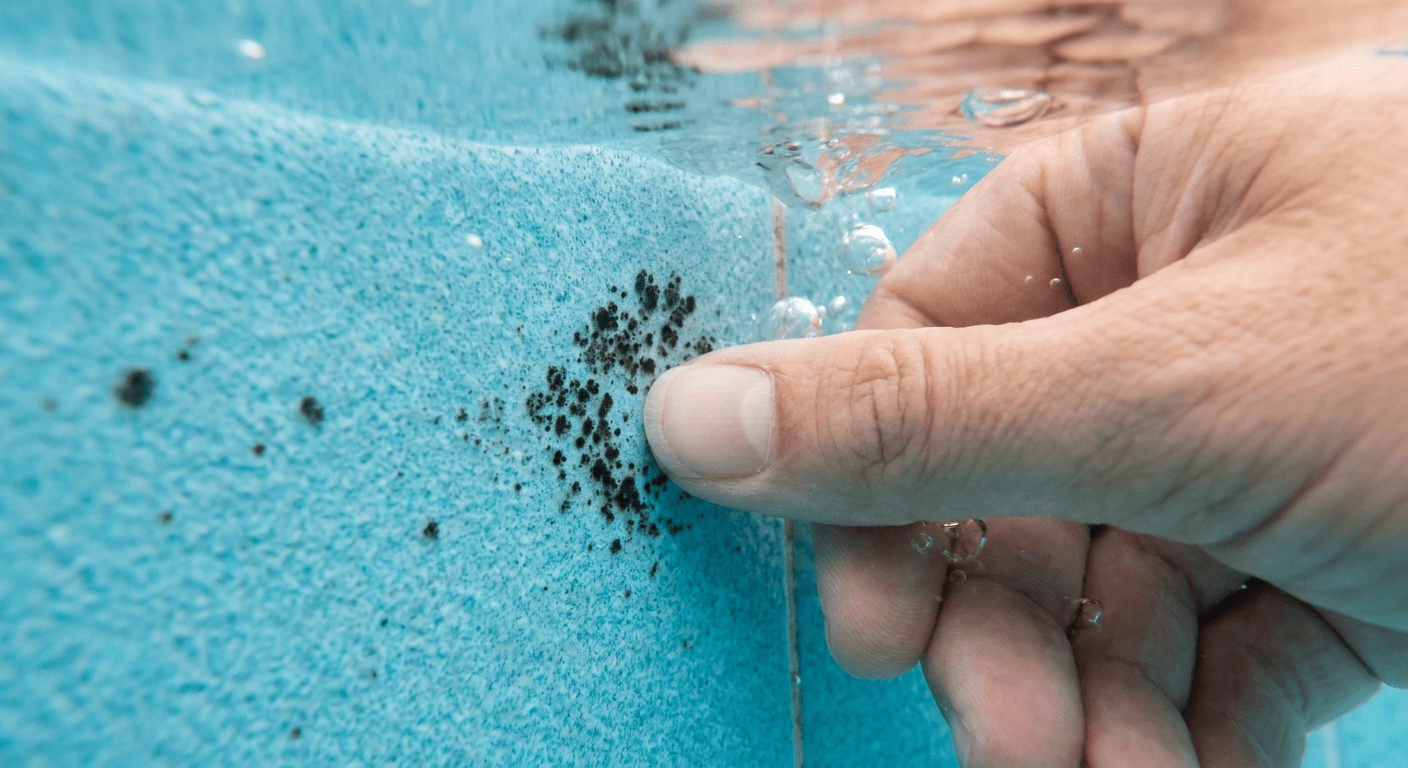
Black algae appears as small black dots or blotchy patches on pool walls and floors. The spots feel raised and rough to the touch. Unlike stains, black algae does not brush away easily and returns quickly after cleaning.
A simple test confirms black algae. Scrape a spot with your fingernail and rub it on white paper. If it leaves a greenish streak, you have black algae. Stains from iron or dark aggregate do not produce this green mark.
Some conditions can be mistaken for black algae. Fertilizer granules containing iron can leave dark stains. Pebble finishes may contain black aggregate that looks similar. Always test before starting treatment.
Step-by-Step Removal Process
Removing black algae requires both mechanical and chemical treatment. The process takes one to two weeks of consistent effort.
Step 1: Test and Balance Water Chemistry
Before treatment, test your pool water. Check pH, alkalinity, chlorine, and cyanuric acid levels. Adjust pH to 7.2 to 7.6 and alkalinity to 80 to 120 ppm. Proper balance helps chemicals work effectively.
Step 2: Clean the Filter
Black algae spores can hide in your filter system. Backwash sand or DE filters, or rinse cartridge filters thoroughly. A clean filter prevents spores from cycling back into the water.
Step 3: Brush Aggressively
Black algae has a protective outer layer that blocks chemicals. You must break this layer to reach the roots. Use a stainless steel brush for plaster or concrete pools. For vinyl or fiberglass, use a nylon brush to avoid damage.
Focus on corners, steps, and shaded areas. Scrub each spot vigorously to expose the roots underneath.
Step 4: Apply Chlorine Directly
After brushing, apply concentrated chlorine directly to the affected areas. Break a chlorine tablet in half and rub the exposed side onto the spots. This delivers a high dose directly to the roots.
Step 5: Shock the Pool
Shock the entire pool with a heavy dose of calcium hypochlorite. Use three to four times the normal amount. For a 10,000-gallon pool, this means about three to four pounds of shock.
Add the shock at dusk. Sunlight breaks down chlorine quickly, and shocking at night gives the chemicals eight to twelve hours to work. Run the pump continuously for 24 hours.
Step 6: Brush and Repeat
Brush the pool again the next morning. Repeat the brushing and shocking process daily until all spots disappear. Some stubborn patches may need multiple treatments.
Step 7: Apply Algaecide
After shocking, apply a black algae-specific algaecide. Copper-based algaecides work well on black algae because copper is toxic to cyanobacteria. Follow the manufacturer’s dosage instructions carefully.
Step 8: Vacuum and Clean the Filter
Once the algae is dead, vacuum the pool to remove debris. Set the vacuum to waste if possible, so dead algae does not go through the filter. Clean the filter one final time.
How to Prevent Black Algae from Returning
Prevention is easier than treatment. Once your pool has had black algae, it is more susceptible to future outbreaks. Consistent maintenance is the only way to keep it away.
Maintain proper chlorine levels at all times. For pools prone to black algae, keep free chlorine at 12 to 15 percent of your cyanuric acid level. For example, if CYA is 80 ppm, maintain chlorine around 12 ppm. Do not let levels drop.
Brush the pool weekly, even when it looks clean. Focus on steps, corners, and shaded walls where algae first appears.
Run the pump for eight to twelve hours daily. Good circulation prevents stagnant areas where spores settle.
Rinse swimwear and pool toys after use in lakes or oceans. Spores can transfer easily from contaminated items.
Consider installing a salt water chlorine generator if you live in a warm climate.
These systems help maintain consistent chlorine levels, which is critical for preventing black algae.
The key to long-term success is understanding how to target black algae in pool at the root level rather than just treating surface symptoms.
Inspect hidden spots regularly. Check behind lights, under steps, around ladders, and inside skimmers for early signs of growth. Catching black algae early makes removal much easier.
Is Black Algae Dangerous?
Black algae itself is not highly toxic, but it creates conditions where harmful bacteria can thrive.
The slimy surface of black algae can harbor E. coli and other pathogens.
Swimming in a pool with black algae increases the risk of skin irritation, nausea, and stomach cramps.
Do not swim in a pool with active black algae. Wait until treatment is complete and water chemistry is balanced before swimming.
Final Thoughts
Black algae is stubborn but beatable. The key is combining physical disruption with high chlorine levels and consistent maintenance. Brush aggressively, shock heavily, and stay consistent with daily treatment until every spot is gone.
Once removed, prevention becomes your priority. Maintain proper chlorine levels, brush regularly, and inspect hidden areas. With the right approach, you can keep your pool clear and enjoy trouble-free swimming all season.